Borobudur has survived more than a thousand years, but time, water, vegetation, and structural pressure caused serious damage. The story of Borobudur Temple Restoration explains how conservation teams protected the monument through two major restoration periods. These projects combined archaeology, engineering, documentation, and international cooperation.
The Early Restoration Effort
From 1907 to 1911, Theodoor van Erp led one of the earliest major conservation projects at Borobudur. The Dutch colonial authorities assigned him to record the monument’s condition and protect it from further structural deterioration.
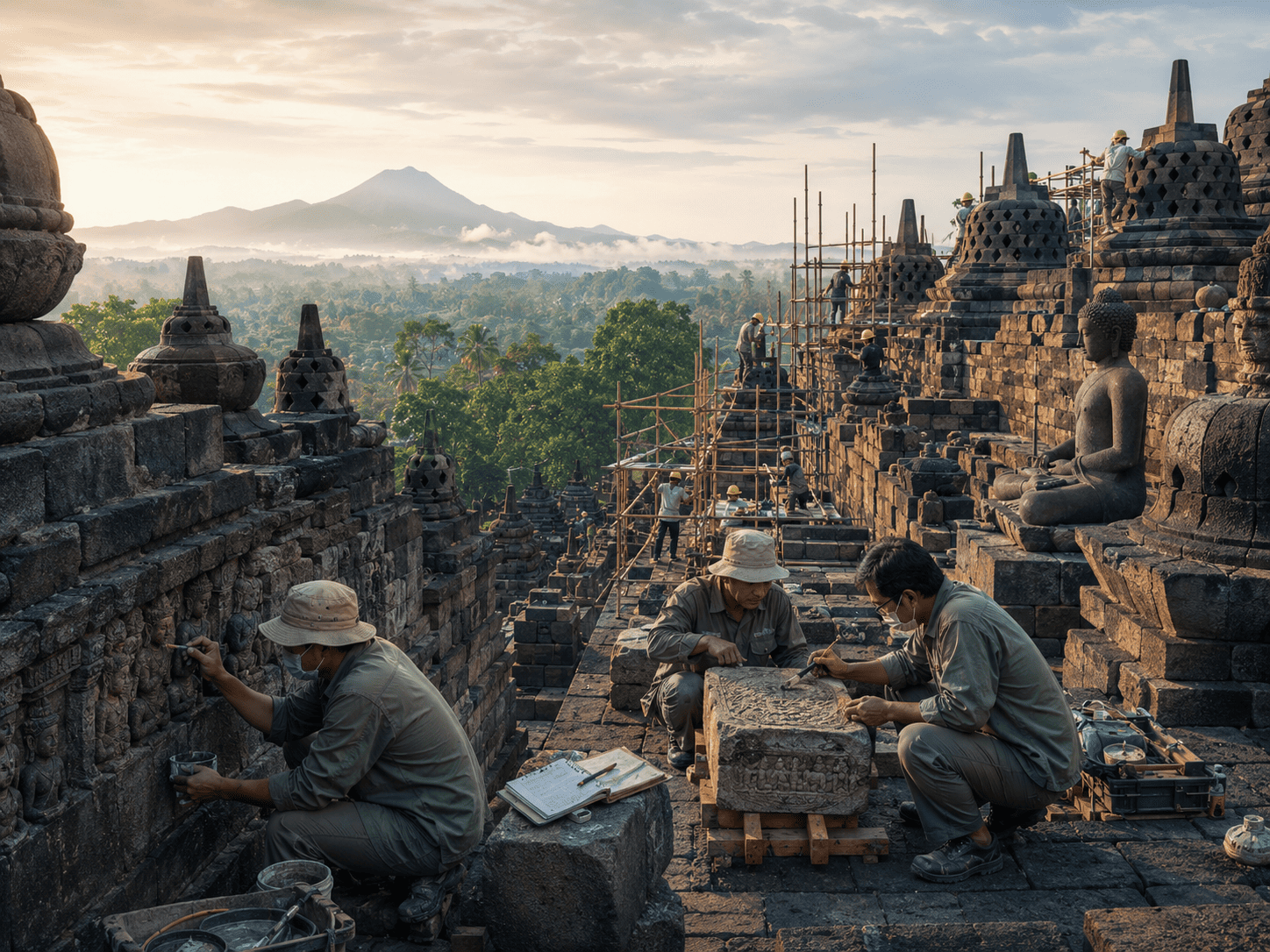
Van Erp and his team reorganized displaced stones and strengthened important parts of the monument. They followed an anastylosis approach, which reused original materials whenever possible. Workers added new stone only when they needed extra support or replacement pieces.
This work restored much of Borobudur’s architectural form. However, it could not solve every problem. Water continued to enter the structure, while unstable ground and moisture threatened the stone over time.
For more background on the monument, read our guide to important facts about Borobudur Temple. It explains Borobudur’s history, architecture, Buddhist meaning, and unique features.
Why Did Borobudur Need Another Restoration?
By the mid-twentieth century, experts saw that Borobudur faced serious conservation problems. Rainwater entered joints between stones and increased deterioration. Moisture also encouraged biological growth and weakened parts of the monument.
Indonesia began planning a larger conservation effort after independence. Professor Soekmono played a major role in pushing the project forward. The Indonesian government later partnered with UNESCO and specialists from several countries to develop a lasting conservation strategy.
The Major International Conservation Program
A second large-scale restoration of Borobudur took place between 1973 and 1983.. Indonesia led the project with UNESCO support and international cooperation.
Conservation teams dismantled sections of the monument so they could strengthen the structure underneath. They documented stones carefully before returning them to their positions. Engineers also improved drainage and waterproofing to control one of Borobudur’s biggest threats: water.
The project used archaeological research, structural engineering, chemistry, geology, and detailed documentation. UNESCO describes it as an early major international campaign that used modern scientific techniques for monument conservation.
The restoration lasted about ten years and involved hundreds of workers. It officially ended in February 1983.
What Happened After the Restoration?
Restoration did not end the need for conservation. Borobudur still faces rain, humidity, stone deterioration, volcanic ash, tourism pressure, and biological growth.
Conservation teams continue to inspect drainage, clean stone surfaces, study deterioration, and repair problem areas. This ongoing work helps protect both the structure and its reliefs.
In 1991, UNESCO added the Borobudur Temple Compounds to the World Heritage List. The listing includes Borobudur, Mendut, and Pawon.
Why Restoration Matters to Visitors
Understanding the restoration history can make a temple visit more meaningful. Many parts of Borobudur survived because engineers, archaeologists, conservators, and local workers spent decades protecting them.
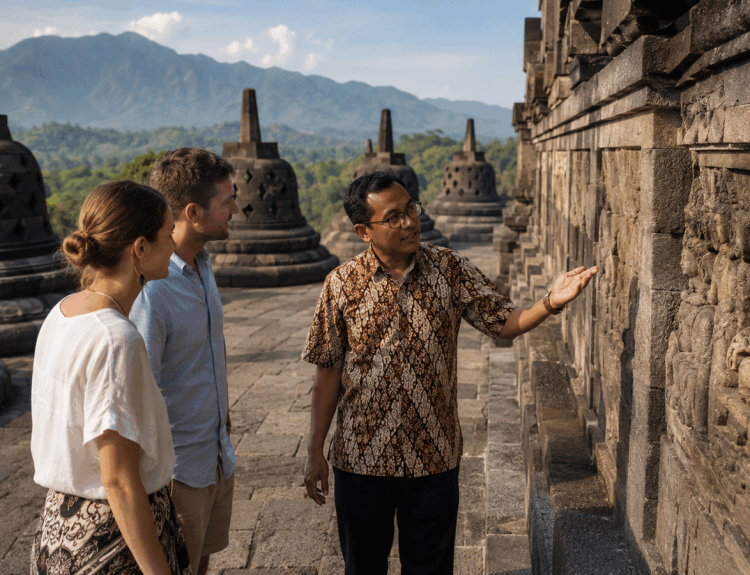
Travelers who want more historical context can explore a private Borobudur tour from Yogyakarta. A local guide can explain the monument’s construction, rediscovery, restoration, reliefs, and Buddhist symbolism.
Visitors also play a role in conservation. Following site rules and respecting protected stone features helps reduce unnecessary damage.
Conclusion
Borobudur Temple Restoration involved much more than rebuilding damaged stone. The Van Erp project restored important architectural sections, while the 1973–1983 Indonesia-UNESCO project tackled deeper structural and drainage problems.
Conservation continues today because Borobudur still faces environmental and tourism pressures. These long-term efforts help preserve one of Indonesia’s most important cultural monuments for future generations.