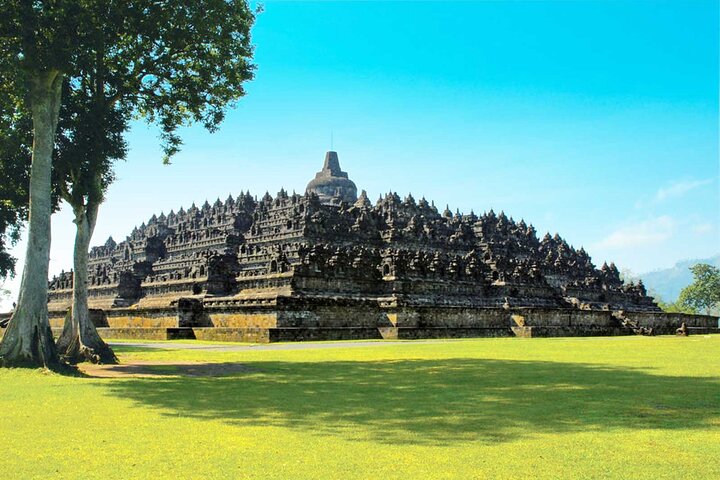
The Borobudur Temple cultural significance extends beyond its impressive stone architecture. The monument represents an important part of Indonesia’s Buddhist heritage and ancient Javanese culture. Its terraces, reliefs, Buddha statues, and stupas combine religious ideas with artistic traditions, creating a site that continues to attract travelers interested in history and culture.
Borobudur Represents Ancient Javanese Heritage
Borobudur reflects the cultural development of ancient Java. Its construction required skilled craftsmanship, careful planning, and a strong understanding of architecture.
The monument’s stone structure demonstrates how ancient communities could organize large construction projects. Artists also contributed detailed carvings that remain an important part of the site’s cultural identity.
These features allow modern visitors to connect with aspects of Java’s historical heritage.
The Monument Has Strong Buddhist Connections
One major aspect of Borobudur Temple cultural significance comes from its Buddhist foundation. The monument incorporates Buddhist ideas into its architecture and artwork.
Visitors move through different levels, beginning with detailed lower galleries and continuing toward the upper circular platforms. This progression connects physical movement with Buddhist concepts.
The stupas and Buddha statues on the upper levels further reinforce the monument’s religious character.
Reliefs Preserve Cultural Stories
The extensive reliefs are another important part of Borobudur’s cultural value. Artists carved scenes depicting Buddhist narratives, human activities, animals, buildings, and elements of the natural world.
The carvings provide visual stories that visitors can explore while walking through the temple galleries.
Beyond their religious themes, the reliefs also contain details about clothing, architecture, transportation, and social activities. These elements make the carvings valuable for understanding the world represented by ancient artists.
Travelers who want to learn more about Borobudur’s history, architecture, Buddhist meaning, and interesting details can explore this Borobudur facts guide.
Borobudur Connects Art and Architecture
Borobudur demonstrates how artistic expression can become part of architecture. The reliefs are carved directly into the stone walls, while Buddha statues and stupas form part of the overall structural design.
This combination creates a unified monument rather than a collection of unrelated artistic features.
Visitors can observe how the detailed lower galleries contrast with the simpler upper platforms. The changing architectural character creates a distinct experience as people move toward the summit.
The Monument Has International Cultural Importance
Borobudur has become an important cultural destination for visitors from Indonesia and around the world. Its architectural design, Buddhist heritage, and ancient artwork contribute to its international recognition.
The monument also plays a role in introducing visitors to Indonesian history and the cultural traditions of Central Java.
Its continued preservation helps ensure that future generations can experience these architectural and artistic features.
Borobudur Remains Part of Living Heritage
Although Borobudur is an ancient monument, its cultural significance continues today. Buddhist communities use the site for important religious occasions, while travelers visit to learn about its history and architecture.
This combination of religious, historical, and tourism activities gives the monument a continuing role in contemporary cultural life.
Why Its Cultural Significance Matters
The Borobudur Temple cultural significance comes from the way the monument combines Buddhist traditions, ancient Javanese craftsmanship, storytelling, architecture, and cultural heritage.
Travelers who want to visit Borobudur and other destinations around Central Java can also explore Borobudur Tours.
Understanding these different aspects can make a visit more meaningful. Borobudur is not simply an ancient structure to photograph. It represents a connection between architecture, religion, art, history, and the cultural heritage of Java.