The Borobudur Temple UNESCO facts highlight the international importance of this ancient monument. Borobudur is recognized for its cultural, architectural, artistic, and religious value. Its distinctive structure, extensive reliefs, Buddha statues, and stupas have helped establish the monument as an important part of Indonesia’s cultural heritage.
Borobudur Became a World Heritage Site
Borobudur received recognition as a UNESCO World Heritage Site in 1991. This recognition reflects the monument’s outstanding cultural importance and its value as an example of Buddhist architecture.
The designation also places greater attention on protecting the monument for future generations.
Its World Heritage status connects Borobudur with other significant cultural sites around the world while highlighting the importance of preserving Indonesia’s ancient heritage.
Its Architecture Has Outstanding Features
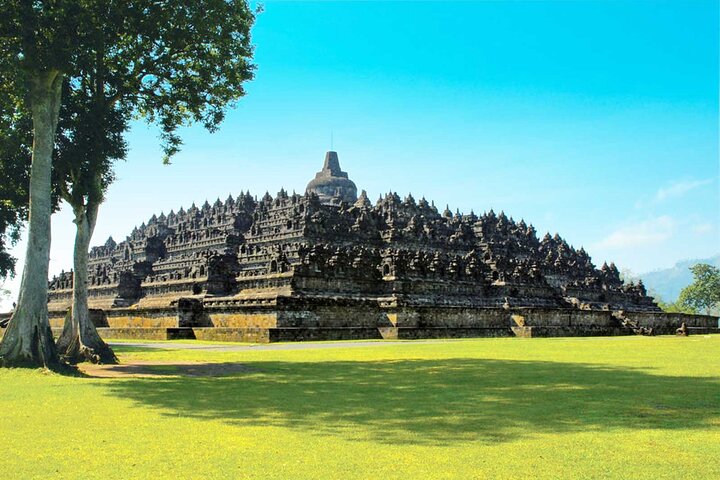
One of the important Borobudur Temple UNESCO facts is the monument’s distinctive architectural design. Borobudur combines square terraces with circular platforms to create a gradual progression toward the summit.
The lower levels contain galleries with extensive reliefs and Buddha statues. Above them, three circular platforms contain rows of perforated stupas.
A large central stupa stands at the highest point and completes the architectural composition.
Borobudur Contains Extensive Stone Reliefs
The monument features thousands of carved relief panels. These artworks depict Buddhist stories as well as people, animals, buildings, plants, and activities associated with daily life.
The reliefs are integrated directly into the architecture. Visitors encounter them while walking through the galleries, making the carvings an important part of the overall experience.
Their artistic and historical value contributes significantly to Borobudur’s cultural importance.
The Monument Represents Buddhist Heritage
Borobudur was built as a Buddhist monument during the ancient Javanese period. Its architecture incorporates concepts associated with Buddhist cosmology.
The movement from the lower galleries toward the upper platforms creates a symbolic progression through various architectural levels.
Buddha statues and stupas further strengthen the connection between the monument’s physical design and its religious heritage.
For travelers who want to explore more information about Borobudur’s history, architecture, Buddhist meaning, and interesting details, this Borobudur facts guide provides a broader overview.
Preservation Is an Important Responsibility
World Heritage recognition also emphasizes the need for continued conservation. Borobudur is an ancient stone monument exposed to weather, environmental conditions, and regular visitor activity.
Conservation efforts help protect the terraces, reliefs, statues, stupas, and other architectural elements.
Maintaining the site requires careful attention because preserving an ancient monument involves balancing public access with long-term protection.
Borobudur Connects Local and Global Heritage
Although Borobudur has international recognition, its roots remain closely connected with the history and culture of Central Java.
The monument provides visitors with an opportunity to learn about ancient Javanese craftsmanship, Buddhist traditions, and historical architecture.
Its global recognition helps introduce these aspects of Indonesian heritage to travelers from different parts of the world.
The World Heritage Status Supports Preservation
The Borobudur Temple UNESCO facts demonstrate that the monument has significance beyond tourism. Its architectural design, reliefs, religious heritage, and historical development make preservation an important cultural responsibility.
Travelers who want to visit Borobudur and other destinations around Central Java can also explore Borobudur Tours.
Understanding its World Heritage status can give visitors another perspective when exploring the monument. Every terrace, relief, statue, and stupa forms part of a cultural legacy that requires continued care and responsible appreciation.